
Pre-Installation Protocols: Rough Opening Standards & Site Preparation
System longevity begins long before uncrating. Precision rough opening measurement, verified substrate leveling, and redundant moisture-barrier prep ensure Orient Juko Metal Art fenestration systems, including our high-performance tilt-and-turn-windows, deliver certified thermal, acoustic, and structural load performance across demanding residential and commercial builds.

Three-Point Dimensional Survey
Measure opening width and height at three points (top, middle, bottom; left, center, right) and compare cross-corner diagonal dimensions. Structural variance must stay within strict engineering limits prior to anchoring sub-frames.
Architectural Engineering Clearance Rules
Maintain a uniform nominal perimeter gap of 3/8 in (9.5 mm) to 1/2 in (12.7 mm) between the frame and structural masonry, steel, or wood framing. This perimeter allowance accommodates thermal expansion, seismic deflection, and closed-cell backing rod compression.
1. Rough Opening Dimensional Survey Protocols
Every rough opening requires optical laser verification prior to uncrating Orient Juko Metal Art window and door assemblies. Structural misalignments in the rough buck cause frame racking, air infiltration, and premature roller or hinge fatigue.
| Inspection Parameter | Standard Allowance | Corrective Threshold |
|---|---|---|
| Level & Plumb Variance | ≤ 1/16 in per 3 ft (≤ 1.5 mm/m) | Grind high spots or shim structural sub-frame |
| Squareness (Diagonal Delta) | ≤ 1/8 in total variation (≤ 3.0 mm) | Resquare rough opening framing prior to sill pan anchoring |
| Sill Horizontal Plane Flatness | ≤ 1/16 in over span (≤ 1.5 mm) | Apply non-shrink structural leveling compound |
| Buck Structural Anchorage | Direct structural substrate attachment | Replace unanchored drywall or soft framing liners |
2. Substrate Waterproofing and Sub-frame Preparation
The building envelope interface must prevent hydrostatic water intrusion while allowing outward vapor dissipation. Never rely solely on perimeter sealant beads; redundant, integrated flashing layers are mandatory.
- Continuous Sill Pan Membrane Install a self-adhering modified bitumen or fluid-applied flashing membrane across the sill rough buck, turning up jambs at least 6 inches with sealed end-dams.
- High-Density Setting Shims Position high-density polyethylene (HDPE) or engineered composite shims under main load points. Compressible or rot-prone timber shims are prohibited.
- Galvanic Dissimilar Metal Isolation Apply bituminous or non-conductive dielectric isolation coatings between bare concrete or steel surfaces and structural aluminum extrusions.
- Integrated Air-Water Barrier Laps Shingle-lap weather-resistive barriers over self-adhered jamb and head flashings to direct all incidental drainage away from interior wall cavities.
3. Jobsite Offloading, Staging, and Storage Protection
Safeguard factory-applied architectural powder coats, PVDF finishes, and anodized profiles during active construction and trade rough-in phases.
Elevated Vertical Stacking
Store crates and frames at least 4 inches off the slab on level timber bunks. Position frame assemblies upright at an 80-degree angle. Never stack glazed sash units flat.
Ventilated Weather Shelters
Stage crated inventory in dry, covered zones away from ongoing masonry cutting, wet plastering, or hot welding. Ensure cross-ventilation to prevent moisture entrapment.
Protective Film Removal Timing
Factory protective film prevents jobsite abrasion and mortar splatters. Peel all exterior films within 60 days of delivery to prevent UV-induced adhesive baking and residue transfer.
Preventing Chemical Etching & Dissimilar Metal Corrosion
Fresh Portland cement, stucco, and acid washes are highly alkaline and will permanently etch powder-coated and anodized aluminum surfaces within hours. Rinse splashes immediately with clean potable water and pH-neutral soap. Never use steel wool, razor blades, or caustic chemicals on architectural extrusions or coated glass.
Standardized Category Fitting Protocols
Follow precise field-assembly guidelines for Orient Juko architectural window, door, and fencing products. Engineered to secure maximum structural integrity, weathertight perimeter sealing, and long-term acoustic performance.
Precision Window Assembly & Thermal Barrier Fitting
Standard operating procedures for integrating thermally broken aluminum windows into concrete, steel stud, or wood buck rough openings. Focuses on dead-load anchoring, corner plumb retention (tolerance ±1.5mm), and dual-tier perimeter drainage paths.
Perimeter Setting & Level
Dry-fit the master outer frame. Set high-density polyethylene (HDPE) load-bearing shims under jambs and sill. Laser-check horizontal and vertical plumb.
Mechanical Anchoring
Drive 304/316 stainless steel countersunk frame fasteners 150mm from inside corners, spaced at max 400mm centers. Never distort the polyamide thermal break.
Insulation & Sealing
Inject low-pressure expanding PU foam in perimeter gaps. Back with closed-cell PE backer rod, then apply neutral-cure structural silicone exterior seal.
Sash Hanging & Tuning
Hang operable sashes. Calibrate multi-point locking pins via 4mm hex keys to optimize EPDM gasket compression to 25–30% nominal depth.
Custom Shop Drawings & Jobsite Engineering Support
Orient Juko Metal Art provides full CAD/BIM anchor detail drawings and live virtual jobsite consultations for commercial and residential contractors worldwide.
Professional Installation Tools & Sealing Material Specifications
Substandard consumables and improper tooling compromise structural integrity and weatherproofing. Orient Juko Metal Art mandates high-grade installation tools, weather-resistant structural glazing sealants, and corrosion-free thermal break fasteners to ensure long-term airtight and watertight performance for every project.
Window Installation Tools
Requires high-precision laser levels, heavy-duty glass suction cups, and calibrated torque wrenches for exact frame alignment and safe glazing handling.
Thermal Break Fasteners
Strictly specifies 304/316 stainless steel bolts and anchors to prevent galvanic corrosion, metal fatigue, and thermal loss across structural connections.
Structural Glazing Sealant
Recommends neutral silicone sealants, factory-molded EPDM gaskets, and low-expansion polyurethane foams to deliver resilient, long-lasting joints.
HDPE Setting Shims
Utilizes high-density polyethylene load-bearing shims to distribute glass weight evenly, preventing edge cracking and eliminating cold bridges.

System Compatibility & Material Standards
Every Orient Juko architectural system is engineered to integrate seamlessly with high-specification auxiliary sealants and marine-grade hardware.
Routine Cleaning and Surface Care Guidelines
Maintaining the aesthetic integrity and structural performance of your Orient Juko Metal Art systems requires a disciplined approach to care. Proper maintenance not only preserves the premium finish of our aluminum profiles but also extends the operational lifespan of your architectural glass and hardware components, including our high-performance tilt-and-turn windows.
Recommended Cleaning Schedules
Environmental factors significantly dictate the frequency of required maintenance. We recommend the following intervals to prevent the accumulation of corrosive contaminants and ensure your aluminum frames, such as those found on our picture-and-fixed-windows, remain in peak condition:
| Exposure Environment | Recommended Cleaning Frequency |
|---|---|
| Inland / Rural Areas | Every 6 months |
| Urban / Industrial Zones | Every 3 months |
| Coastal / High Salt Spray | Monthly |

Standard Washing Method
- Use a mild, pH-neutral detergent diluted in warm water.
- Apply the solution using a soft, non-abrasive microfiber cloth or a gentle sponge.
- Gently wipe the aluminum surface to lift dust, salt deposits, and atmospheric pollutants.
- Rinse thoroughly with clean, fresh water to ensure all soap residue is removed.
- Dry the surface immediately with a clean, lint-free chamois or soft cloth to prevent water spotting.
Prohibited Chemicals & Equipment
To avoid permanent damage to powder-coated finishes and anodized surfaces on our bi-fold-doors, strictly avoid the following materials and tools:
- Strong acidic or highly alkaline cleaning agents.
- Solvents such as acetone, paint thinners, or harsh industrial degreasers.
- Steel wool, scouring pads, or any abrasive brushes that can scratch the finish.
- High-pressure power washers (unless set to a very low, mist-like setting to avoid seal damage).
Architectural Glass Maintenance
Our high-performance architectural glass requires specific care to maintain clarity and coating integrity. Always ensure that glass surfaces are free of loose grit before wiping to prevent micro-scratches. For Low-E coated glass, use only specialized glass cleaners that are explicitly labeled as safe for coated surfaces. If you encounter stubborn residue, such as construction adhesive or tape, use a plastic scraper at a shallow angle, ensuring the glass remains wet during the process to minimize friction and prevent surface marring.
Orient Juko Metal Art utilizes premium AkzoNobel finishes designed for longevity, but consistent care remains the best defense against environmental degradation and long-term wear.
Hardware & Track Maintenance: Long-Life Lubrication & Fine-Tuning
Architectural aluminum casements, sliding doors, and curtain wall systems rely on precision gearboxes, heavy-duty hinges, and multi-point locking mechanisms. Maintaining fluid kinematic motion, air-tight gasket compression, and certified wind-load resistance requires structured door hardware lubrication, routine window track maintenance, and periodic roller adjustment. Follow this standardized technical protocol from Orient Juko Metal Art to prevent sash sagging, preserve weather seals, and ensure peak performance over decades of operation. For complex repairs, explore our professional maintenance services to ensure your systems remain in optimal condition.
Lubricant Selection and Chemical Compatibility
Using unsuitable lubricants can degrade EPDM weatherstripping, trap abrasive grit, and break down factory-applied gear grease. Orient Juko systems specify non-acidic, non-gumming lubricants formulated specifically for architectural fenestration hardware.
| Lubricant Category | Hardware Compatibility | Performance Attributes |
|---|---|---|
| PTFE Dry Film Spray | Exposed slide tracks, stainless guide rails, sliding lock keeps | Dries clean and clear; repels dirt, sand, and dust without sticky residues |
| Pure Silicone Lubricant | EPDM compression seals, perimeter weatherstrips, nylon guides | Preserves elastomer elasticity; prevents binding, drying, and friction squeaks |
| Synthetic Lithium Grease | Internal gearbox drives, transmission rods, concealed hinge pins | High load-bearing endurance; guards against corrosion and moisture wash-off |
Inspection and Maintenance Schedule
Establish proactive preventive maintenance cycles aligned with environmental exposure levels and operational frequency:
- 1 Standard Residential (Every 12 Months): Clean track troughs, apply PTFE spray to exposed sliding rollers, and cycle perimeter locking cams.
- 2 Commercial / High Traffic (Every 6 Months): Inspect tandem roller carriage height, re-grease concealed gearboxes, and verify perimeter sash alignment.
- 3 Coastal / High Salinity (Every 3 Months): Flush all exposed hardware with clean fresh water, dry thoroughly, and apply marine-grade anti-corrosion barrier spray.
Sash Sagging Correction & Hardware Adjustment Matrix
Over extended operational cycles or minor building movement, heavy double- and triple-glazed panels may require micro-adjustments. Orient Juko multi-axis hinges and heavy-duty tandem bogie rollers feature built-in three-way mechanical calibration to eliminate door sagging and restore tight acoustic sealing.
Vertical Height Adjustment
Located at the lower pivot base of corner hinges or the side adjustment port of bottom tandem roller carriages.
Lateral Plumb Calibration
Positioned on the upper scissor stay arm or side adjustment screws on heavy pivot hinges.
Gasket Compression Pressure
Controlled by rotating eccentric mushroom locking cams positioned along perimeter transmission rods.
Track Debris Removal
Orient Juko architectural aluminum windows and sliding doors feature pressure-equalized sill chambers. Sand, construction dust, and organic debris in sill tracks can cause roller binding and obstruct critical rain water discharge.

Coastal and Extreme Weather Maintenance Protocols
Protect structural integrity, salt spray protection, and powder-coated surface finishes across severe marine, alpine freeze-thaw, and high-wind environments with Orient Juko technical protocols.
Extreme Environment Surface & Hardware Defense
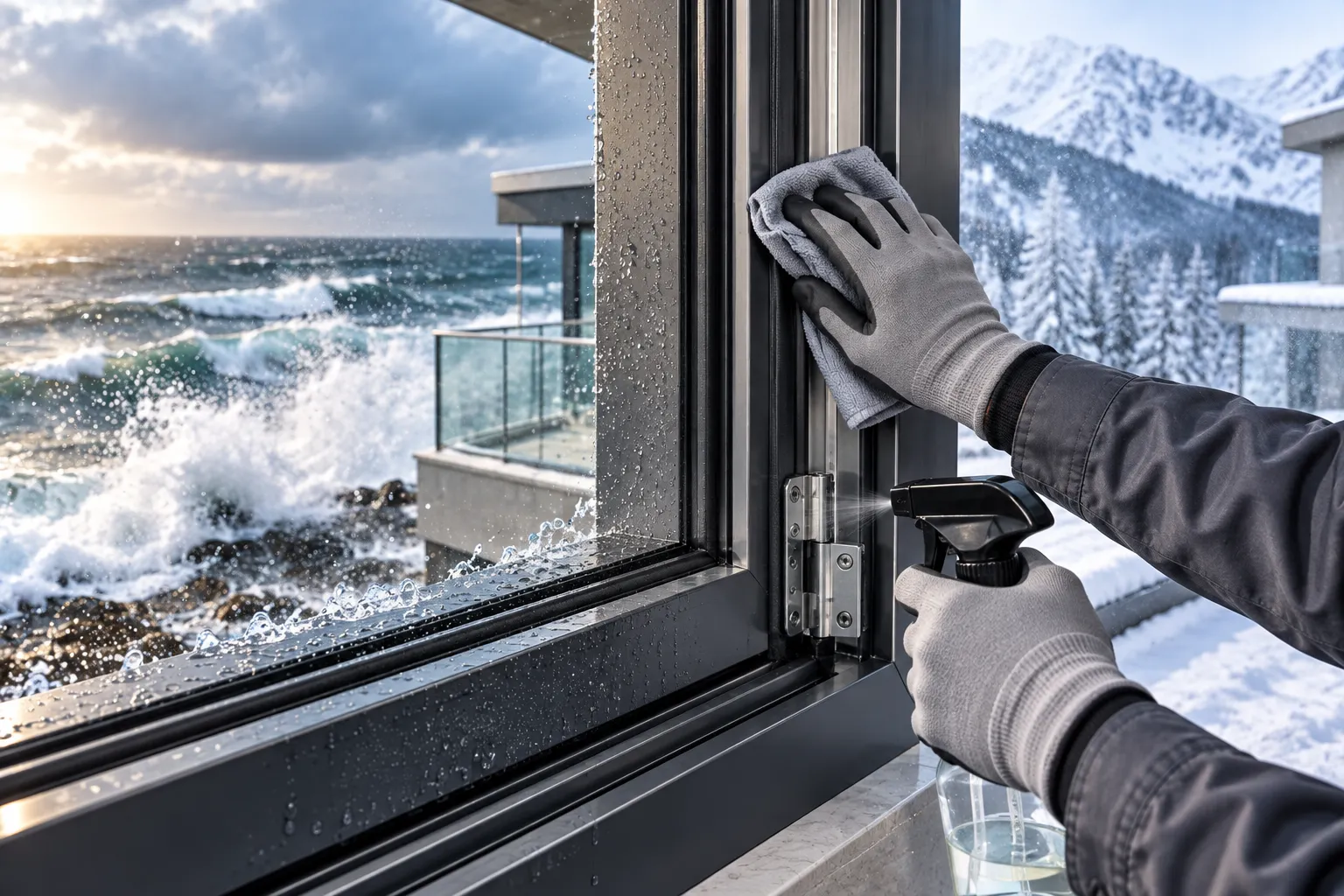
Severe climate zones demand preventative maintenance to avoid premature corrosion or seal degradation. Orient Juko delivers dedicated technical support services and clear operational guidelines for neutralizing salt aerosol accumulation, preserving EPDM weatherstripping, maintaining thermal break integrity, and verifying structural anchors under heavy wind loads.
Coastal Salt Fog Countermeasures
Marine airborne salt speeds up oxidation on untreated surfaces. Follow systematically scheduled cleaning routines to protect powder-coated and anodized finishes.
- ✓ Rinse frames monthly with fresh water to clear salt spray deposits and prevent pitting.
- ✓ Apply marine-grade protective wax to exposed stainless steel hinges and hardware twice yearly.
- ✓ Inspect EPDM gaskets and dielectric isolators between dissimilar metal connections.
Sub-Zero Winterization Care
Repeated freeze-thaw cycles risk cracking compromised weather seals and cause moisture expansion inside tracks. Prepare systems before cold seasons arrive.
- ✓ Clean hidden frame weep holes so melting ice and rainwater drain immediately.
- ✓ Treat perimeter EPDM rubber seals with silicone conditioner to prevent freezing and stiffness.
- ✓ Clear ice and grit from sliding door tracks to protect heavy-duty rollers and track profiles.
Pre-Typhoon & Storm Checks
High winds and driving rain create strong pressure differentials. Verify structural anchor tightness, locking points, and drainage path clearance prior to major storms.
- ✓ Check structural base plate anchor bolts and frame fasteners with a calibrated torque wrench.
- ✓ Ensure multi-point locking handles engage fully around the frame perimeter for complete air/water seal.
- ✓ Inspect structural silicone joints and clear exterior drainage caps to prevent water backflow.
Need a Project-Specific Extreme Weather Plan?
Orient Juko Metal Art offers certified metallurgical support, custom maintenance schedules, CAD detailing, and direct technical consultations for challenging coastal and alpine developments worldwide.
Architectural Fenestration Troubleshooting & Diagnostic Checklist
Systematic field inspection protocols for aluminum windows, commercial entrance doors, and large-format sliding systems. Standardized procedures ensure factory-level airtightness, structural water resistance, and effortless kinetic operation throughout the product lifecycle.
Rapid System Health Verification
Routine thermal expansion, building settling, and severe meteorological events can cause minor misalignments across structural aluminum envelope systems. Timely identification of operational anomalies protects thermal break barriers and prevents progressive hardware wear.
Pre-Inspection Equipment Requirements
- ✓ Calibrated Feeler Gauges & Calipers: To measure uniform gasket compression between 2.0 mm and 3.5 mm.
- ✓ Digital Inclinometer & Laser Level: Verifying sill flat plane and jamb plumb across total frame spans.
- ✓ Metric Allen Hex Drive Set: Dedicated 2.5 mm, 3.0 mm, and 4.0 mm drivers for multi-point cam and hinge adjustment.
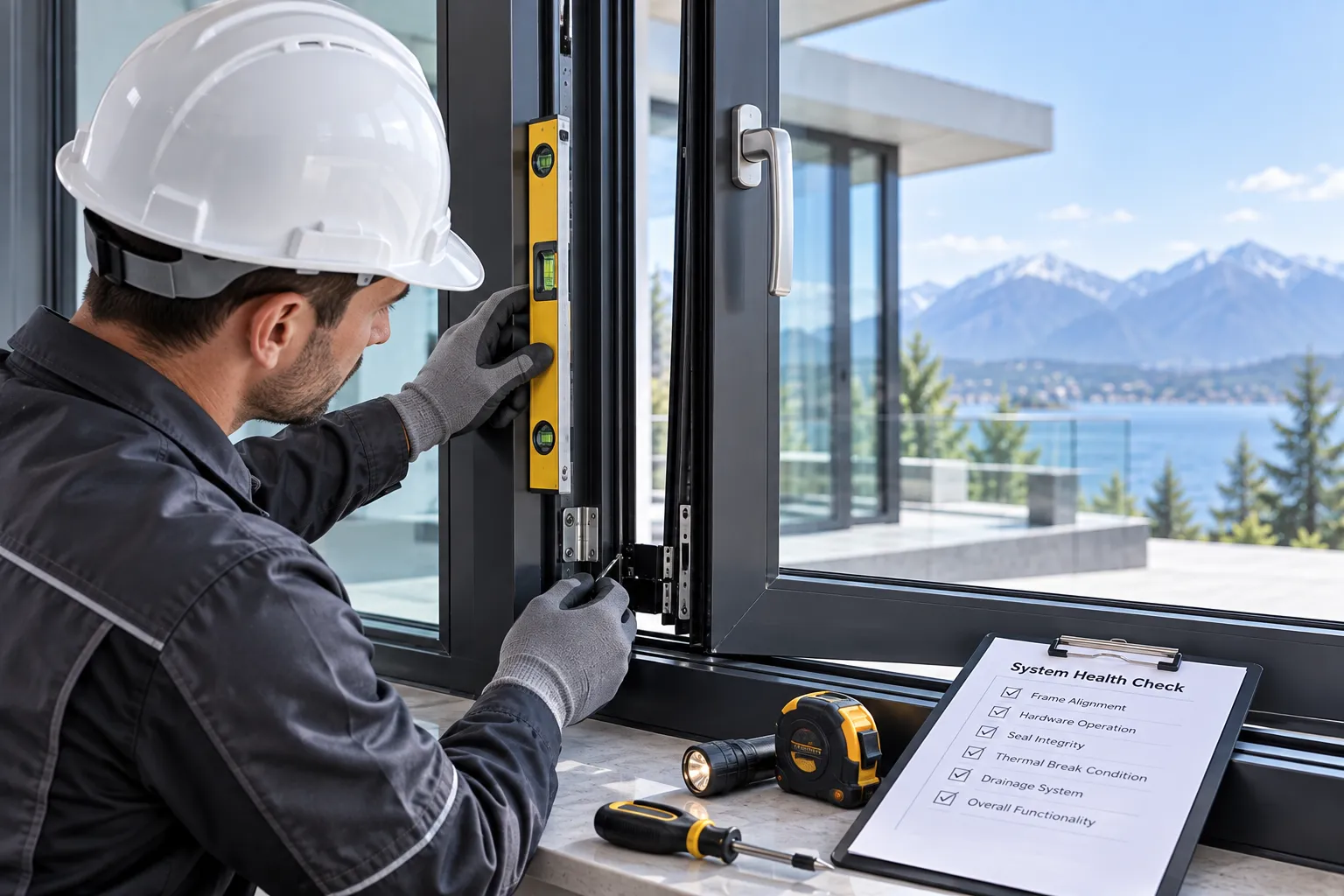
Infiltration of exterior air typically indicates insufficient gasket contact pressure, thermal sash bow, or an unseated multi-point locking cam.
Field Diagnostic Steps
Perform a paper pull test along all four corners. If paper releases without resistance when the sash is fully latched, perimeter compression is compromised.
Standard Corrective Action
Rotate eccentric locking roller cams using a 4 mm Allen key to advance compression toward the frame. Inspect EPDM co-extruded seals for pinching or shrinkage.
Diagnostic Tolerances & Action Threshold Matrix
Standard operational criteria for field engineers and property maintenance teams verifying structural fenestration integrity.
| Subsystem Inspection Point | Design Target Parameter | Permissible Field Variance | Immediate Corrective Protocol |
|---|---|---|---|
| Perimeter Weatherseal Gasket | 3.0 mm constant engagement | ±0.8 mm max variance | Calibrate cam pressure or replace localized gasket segment. |
| Sliding Door Rail Alignment | 0.0 mm horizontal level across sill | ≤1.5 mm across 3000 mm span | Shim underlying sub-sill; level tandem roller carriage pins. |
| Frame Drainage Capacity | Complete evacuation in <60 sec | ≤120 sec without rim overflow | Dislodge weep valves, remove sand grit, re-seat baffle flap. |
| Entrance Door Bottom Clearance | 6.0 mm uniform sweep reveal | ±1.5 mm corner differential | Re-block glass unit diagonally; elevate hinge vertical pin. |
Require Field Engineering Escalation?
Orient Juko provides technical consultation, digital structural analysis, and replacement hardware kits for complex commercial installations.
Warranty Compliance & Direct Engineering Support
Preserve full factory warranty protection for your aluminum windows, doors, and fencing systems by following our certified Certifications & Compliance standards and scheduled maintenance protocols. Orient Juko delivers end-to-end technical backing to ensure lifelong structural integrity and weather-sealed performance.
Warranty Protection
Compliant installation safeguards multi-year coverage across aluminum profiles, glass units, and precision hardware systems.
Engineering Assistance
Access architectural CAD shop drawings, site-specific anchorage details, and comprehensive buying guides directly from our technical team.

Technical guidance from specification and installation through long-term system maintenance.
Factory-direct technical support for architects, contractors, developers, and project teams worldwide.