


Are you struggling with stuck, screeching window tracks that just refuse to budge?
Using the wrong spray will only attract grime and gum up the tracks. Choosing the best lubricant for aluminum storm windows is the secret to getting them sliding effortlessly in seconds.
In this guide, you’ll learn exactly which lubricant for aluminum storm windows actually works, the common household products you should never use, and the step-by-step method for lubricating aluminum storm windows like a pro.
Let’s get those tracks moving smoothly again!
Why Aluminum Storm Windows Stick (The Physics of Metal-on-Metal Friction)
When an aluminum storm sash screeches, jerks, or seizes inside its frame, you are dealing with a direct mechanical breakdown between mating metal surfaces. Aluminum is a relatively soft, non-ferrous metal with high surface friction. Without the right lubricant for aluminum storm windows, bare aluminum sliding directly against an aluminum track results in galling—a process where microscopic surface high points friction-weld and tear away, leaving gouges that permanently ruin smooth operation.
Properly diagnosing the root cause is the first step toward a lasting window channel friction fix and restoring effortless glide.
The Mechanics of Aluminum Track Wear and Thermal Expansion
Aluminum expands and contracts significantly under direct sunlight and outdoor temperature fluctuations.
Thermal Expansion: On hot summer afternoons, the sash frame expands faster than the surrounding outer casing. This tightens operational tolerances and pinches the frame.
Micro-Galling & Grooving: Every forced movement without lubrication wears micro-ridges into the track floor. These ridges act like mechanical teeth, binding the sash tighter over time.
Tolerances and Racking: Even a fraction of a millimeter of track deformation causes the sash to twist out of square, multiplying resistance along the vertical channels.
The Role of Environmental Buildup: Dust, Pollen, and Grime
Exterior window frames act as catch basins for airborne particles. Over months of exposure, external elements transform ordinary friction into a complete jam:
Abrasive Sludge: Windblown silt, pollen, vehicle exhaust, and mineral-laden rainwater settle deep inside the bottom sash channels.
Sandpaper Effect: When you slide a dry sash over accumulated grit, the debris grinds into the aluminum substrate, accelerating surface scoring.
Blocked Drainage: Compacted dirt prevents exterior sill weep holes from shedding water, keeping the lower track perpetually damp and accelerating aluminum oxidation.
Component Degradation: Hardened Pile Weatherstripping and Guide Inserts
Smooth window movement relies heavily on secondary hardware components working alongside the metal extrusions:
Crushed Wool Pile: Factory-installed pile weatherstripping along sash edges provides air sealing and low-friction sliding. Over time, UV rays and moisture crush, mat, and stiffen these fibers into hard, abrasive blocks.
Brittle Nylon Corner Guides: Plastic slide blocks and corner keys dry out, crack, or wear unevenly, forcing bare aluminum edges into direct, abrasive contact with the frame.
Oxidized Spring Latches: Slide latches and zinc pivot pins collect dirt, locking the sash in a cocked position inside the track channel.
Addressing these mechanical stresses with regular aluminum sliding window maintenance and applying the best lubricant for aluminum storm windows eliminates binding, preserves hardware life, and keeps sashes operating effortlessly year-round.
The Best Lubricants for Aluminum Storm Windows
Finding the best lubricant for aluminum storm windows comes down to chemistry. Aluminum channels collect grit quickly, so we never use wet oils or heavy greases that turn outdoor dust into grinding paste.
For smooth, silent sash movement, stick to these three specialized formulas:
1. Dry PTFE (Teflon) Spray: The Clean Non-Stick Standard
Dry PTFE spray is our top pick for metal channels and storm window sashes.
Residue-Free: Goes on wet to penetrate tight friction points, then flashes off in seconds to leave an invisible, micro-thin fluoropolymer film.
Zero Dirt Attraction: Because the coating is completely dry, airborne dust, pollen, and debris cannot stick to the tracks.
Corrosion Resistance: Shields bare aluminum against moisture and seasonal oxidation.
2. 100% Pure Silicone Spray: Best for Rubber and Vinyl Guides
A high-viscosity, fast-drying silicone spray is an exceptional lubricant for aluminum storm windows with integrated rubber seals, felt pile, or vinyl slide inserts.
Waterproof Barrier: Repels rain and condensation while stopping freeze-up in sub-zero temperatures.
Material Conditioning: Rehydrates dried-out weatherstripping and vinyl guide tracks to eliminate friction squeaks.
Application Note: Use pure silicone without petroleum carriers to protect your perimeter seals from chemical degradation. Proper upkeep here is a key factor when considering aluminum storm windows maintenance and performance upgrades.
3. Dry Graphite Powder: Best for Metal Latches and Lock Pins
Microfine graphite powder provides extreme high-pressure dry lubrication specifically for hardware mechanisms.
Target Application: Ideal for storm window spring-loaded corner latches, slide bolts, and tilt pins.
Track Precaution: Keep graphite powder out of primary exterior window tracks. Wind and rain can wash the black powder across your sills and stain paint or siding.
Lubricant Comparison Matrix
| Lubricant Type | Residue Type | Dust / Grit Attraction | Safe on Weatherstripping | Primary Best Use |
|---|---|---|---|---|
| Dry PTFE (Teflon) | Micro-thin dry film | None (Repels dust) | Yes | Aluminum sash channels & slider tracks |
| Pure Silicone Spray | Slick, fast-curing film | Low | Excellent | Vinyl glides, tracks, & rubber gaskets |
| Dry Graphite Powder | Dry micro-powder | None | Fair (Can stain) | Slide latches, springs, & lock pins |
When lubricating aluminum storm windows, matching the right non-petroleum dry formula to the specific component keeps your tracks moving freely without creating a messy sludge trap.
Dangerous Mistakes: Lubricants You Should NEVER Use on Aluminum Windows
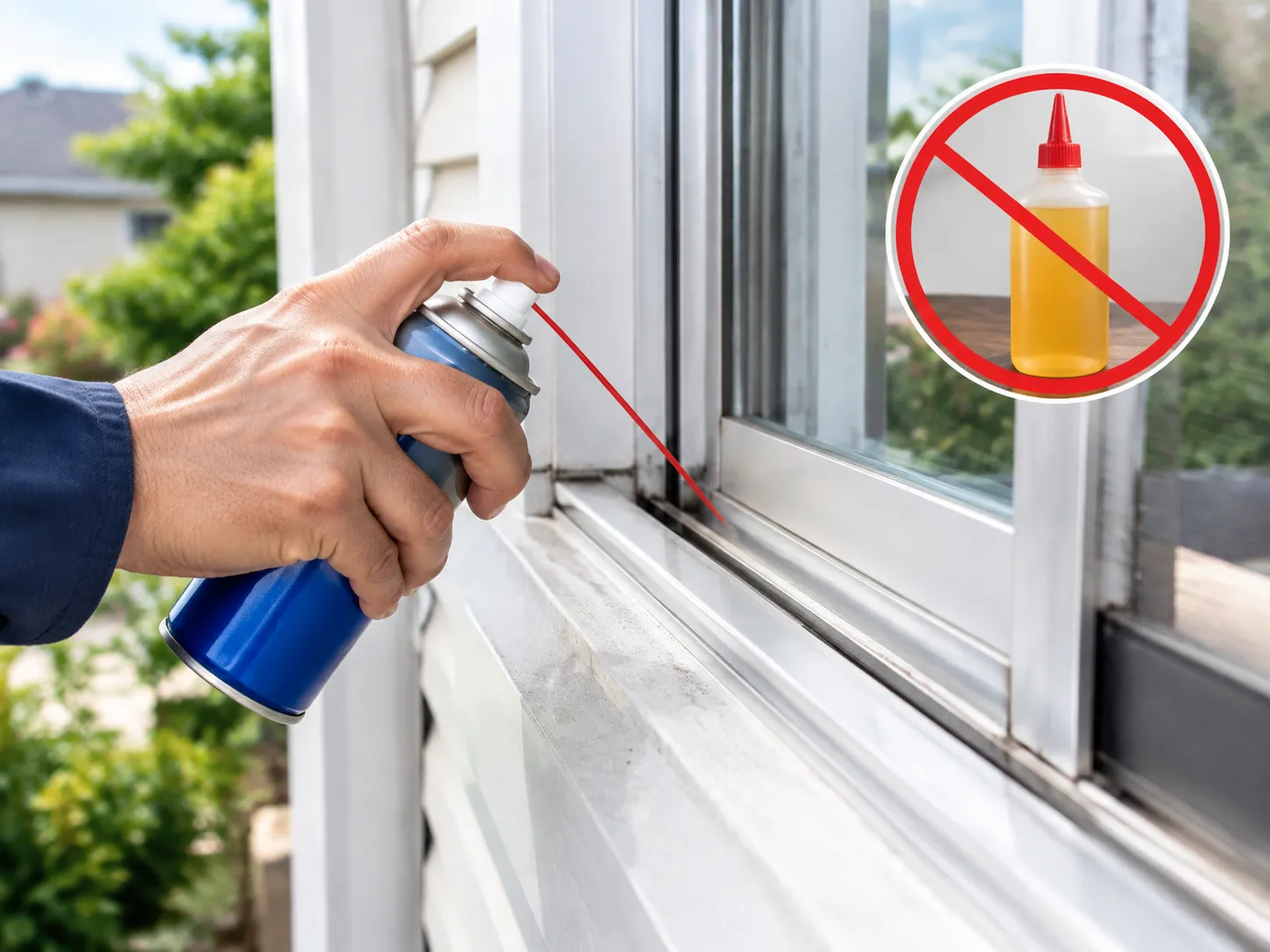
Standard Multi-Use WD-40: Solvent Hazards and Short-Term Moisture Traps
The classic blue-and-yellow can is a household staple, but standard multi-use WD-40 is not the best lubricant for aluminum storm windows. It is formulated primarily as a solvent and water displacer, not a long-term dry lubricant.
-
- Solvent Action: It dissolves old grease and factory coatings, temporarily freeing the sash but leaving the bare aluminum unprotected.
- Sticky Evaporation: Once the carrier solvent evaporates within a few days, it leaves behind a thin, tacky film that acts like flypaper for airborne dust and dirt.
- Moisture Traps: The remaining residue traps moisture against raw aluminum, accelerating track oxidation and surface pitting.
Petroleum Jelly, Motor Oils, and Heavy Lithium Grease: Dirt Magnets
Heavy automotive oils, axle grease, white lithium grease, and petroleum jelly should never touch window channels. While these products provide heavy-duty load protection for enclosed gearboxes, they create severe issues on exposed window frames:
-
- Abrasive Grinding Paste: Heavy petroleum bases capture sand, road silt, and garden debris. Under sash operation, this trapped dirt turns into an abrasive paste that grinds away the aluminum guide lips.
- Weatherstrip Destruction: Petroleum compounds soften, rot, and dissolve rubber seals and synthetic felt pile weatherstrips over time.
- Temperature Stiffening: Heavy grease hardens in cold weather, making storm sashes almost impossible to slide open during winter months.
Following proper installation and maintenance guidelines requires sticking exclusively to a clean, non-petroleum window lubricant designed for architectural metal.
Cooking Oils and Household Sprays: Gummy Buildup and Oxidation Risks
Reaching for cooking spray, vegetable oil, or olive oil is a quick fix that causes permanent hardware headaches:
-
- Polymerization: Plant-based oils oxidize when exposed to exterior UV light and air. They dry into a thick, gummy varnish that effectively glues sliding sashes to the track.
- Biological Growth: Organic oils turn rancid, fostering mold and mildew growth inside the lower track channels and blocking critical drainage paths.
- Difficult Remediation: Removing hardened, polymerized cooking spray requires aggressive chemical strippers that can permanently stain and discolor anodized or painted aluminum frames.
Essential Tools & Materials for Storm Window Servicing
Properly servicing and lubricating aluminum storm windows requires the right kit. Using improper tools or gunky oils will only accelerate track wear and seize your sashes. We recommend assembling these dedicated tools and cleaners before starting your window track tune-up.
Recommended Dry PTFE or High-Grade Silicone Sprays
The best lubricant for aluminum storm windows is a dedicated dry PTFE spray or a 100% pure high-viscosity silicone spray.
Dry PTFE spray for windows: Dries immediately into a slick, micro-thin fluoropolymer barrier that completely repels dust, dirt, and road grit.
Pure silicone spray for window tracks: Delivers maximum water resistance and conditions vinyl glide inserts or perimeter weatherstripping without leaving sticky residues.
Vacuum with Crevice Tool and Soft Brush Attachments
Before introducing any lubricant for aluminum storm windows, every trace of loose debris must be extracted. A shop vacuum or canister vacuum equipped with a narrow crevice nozzle pulls out trapped insects, dried leaves, and gravel from deep channel recesses. Use a soft brush attachment on delicate sill sections to avoid abrading factory coatings.
Non-Metallic Stiff Nylon Detail Brushes
Never use brass or steel wire brushes on aluminum channels. Stiff nylon detail brushes effectively scrub away caked pollen, salt deposits, and light surface oxidation without gouging the aluminum guide lips or tearing the wool pile weatherstripping.
Denatured Alcohol, Mild Dish Soap, and Microfiber Cloths
-
- Mild dish soap & warm water: Breaks down surface road grime and environmental grease during the initial wash.
- Denatured alcohol: Acts as an ultra-clean, fast-evaporating solvent that strips old sticky oil residues, leaving bare metal completely dry and ready to bond with dry PTFE lube.
- Lint-free microfiber cloths: Trap fine particulates rather than spreading them across the track.
Cloth-Wrapped Putty Knife for Deep Channel Cleaning
Storm window channels are notoriously narrow. Wrap a thin microfiber cloth around a stiff, 1.5-inch plastic or metal putty knife to reach the bottom corners of the sash slides. This makes an exceptional DIY storm window track cleaner, clearing stubborn sludge from tight gaps before you apply fresh lubrication.
Whether you are restoring vintage storm frames or keeping modern aluminum sliding windows operating at peak performance, this toolkit guarantees smooth, silent sash movement and long-term hardware protection.
Step-by-Step Guide: How to Clean and Lubricate Aluminum Storm Windows
When lubricating aluminum storm windows, proper surface preparation makes all the difference. Spraying fresh lube onto dirty channels only creates an abrasive grinding paste that wears down metal edges. Follow our reliable workshop method to restore smooth, effortless sash movement.
Step 1: Track Clearance and Safe Window Panel Removal
-
- Retract Latches: Pull the spring-loaded thumb latches inward on both sides of the sash.
- Disengage Sash: Push the sash upward into the top master frame channel to gain bottom clearance, then swing the bottom edge toward you and lower it out.
- Safe Storage: Set the removed glass panels vertically on cardboard or a padded drop cloth to avoid frame distortion and glass damage.
Step 2: Deep Cleaning Channel Tracks (Dry Vacuuming & Wet Scrubbing)
-
- Dry Extraction: Use a vacuum fitted with a narrow crevice tool to pull out loose debris, dead insects, and dried dirt from the lower sash runners.
- Scrub Grime: Dip a stiff nylon detail brush in a mix of warm water and mild dish soap to scrub away baked-on dirt and grease.
- Wipe Deep Grooves: Wrap a clean microfiber rag around the blade of a standard putty knife and slide it from top to bottom through the narrow channels until the metal is bare and spotless. Allow the tracks to dry completely.
Step 3: Checking and Clearing Sill Weep Holes
-
- Locate Drainage Slots: Find the exterior weep holes punched along the bottom sill of the frame.
- Clear Blockages: Insert a small zip tie, pipe cleaner, or piece of wire into the exterior weep openings to dislodge packed dirt and leaf mold.
- Flush Test: Pour an ounce of water into the sill channel to confirm water exits rapidly through the exterior slots rather than pooling in the track.
Step 4: Track Inspection and Channel Realignment
-
- Check for Pinches: Inspect the full length of the aluminum tracks for inward dents, warped lips, or burrs.
- Straighten Metal: Place a wood block against any pinched channel section and gently tap it with a mallet, or use padded pliers to bend distorted track lips straight.
- Smooth Surfaces: Buff away light oxidation roughness with fine bronze wool to recreate the clean glide tolerances found on quality 18 x 27 aluminum single hung windows.
Step 5: Precision Lubricant Application (Direct Channel Spray vs. Rag Wipe)
Using the best lubricant for aluminum storm windows—such as a specialized dry PTFE spray for windows or pure silicone spray—apply the coating using one of two methods:
Direct Channel Spray: Attach the narrow straw nozzle to the spray can. Apply a fast, ultra-light mist down each interior track channel from top to bottom.
Rag Wipe Technique (Recommended): Spray your chosen lubricant for aluminum storm windows directly onto a clean cloth until damp, then run the cloth up and down the track surfaces and over the weatherstrip pile. This ensures complete coverage while preventing oily overspray onto nearby glass surfaces.
Step 6: Servicing Window Slide Latches, Springs, and Hardware
-
- Flush Latches: Clear out built-up grime around the spring-loaded slide bolt housings in the sash corners.
- Apply Dry Hardware Lube: Puff a small amount of dry graphite powder or a pinpoint squirt of dry PTFE into the latch spring cavity.
- Check Tension: Cycle the slide tabs repeatedly to ensure they snap back into the frame detents instantly without sticking.
Step 7: Cycling the Sash and Final Glass Clean-Up
-
- Reinstall Panels: Reinsert the sash top-first into the upper channel, retract the slide latches, align the sash with the proper runner, and release the pins into the track slots.
- Distribute Lubricant: Slide the sash up and down 4 to 6 times to distribute the dry lube film evenly across the metal contact points.
- Final Clean: Wipe down any glass edges with a clean microfiber towel to remove stray lubricant residue and fingerprints.
Troubleshooting: When Lubricant Isn’t Enough
Even the best lubricant for aluminum storm windows cannot fix physical metal damage, severe corrosion, or structural frame shifting. When lubricating aluminum storm windows fails to restore smooth gliding action, we need to inspect and resolve the underlying mechanical issues.
Removing Severe Aluminum Oxidation ("White Rust") with Bronze Wool
Pitted, chalky white residue on exterior tracks is aluminum oxide. This rough crust creates intense friction against sash glides.
-
- Never use steel wool: Steel wool leaves microscopic iron fibers that rust, permanently staining the aluminum and accelerating galvanic corrosion.
- The Fix: Rub the track channels firmly with fine bronze wool (grade 0000 or 000) or a non-metallic abrasive nylon pad dipped in denatured alcohol.
- Final Pass: Vacuum the pulverized oxide dust completely, wipe the surface clean with a dry microfiber cloth, and apply a fresh coat of dry PTFE spray for lasting aluminum window oxidation removal.
Replacing Flattened or Worn-Out Pile Weatherstripping
Worn pile weatherstripping hardens over time, trapping grit and acting like high-grit sandpaper against the channel walls.
-
- Inspection: Look at the fuzzy pile along the edge of the sash. If it is flattened, missing fibers, or hardened by UV exposure, it will cause sticky aluminum window repair headaches.
- The Fix: Slide out the old wool pile from its T-slot retaining groove. Slide in a matching, fresh high-density polypropylene fin-seal pile weatherstrip to eliminate sash play, seal drafts, and remove channel friction.
Diagnosing Out-of-Square Frames and Structural Jamb Settling
When house framing settles, the outer storm window master frame can rack into a trapezoid or bow inward at the center, pinching the sash tightly.
-
- Diagnostic Check: Measure diagonally from top-left to bottom-right, and top-right to bottom-left. Both diagonal measurements should match within 1/16th of an inch.
- The Fix: Loosen the mounting screws along the side jambs. Insert thin shims behind the frame to pull the warped track back into true vertical alignment, then re-tighten the screws.
- If old frames have suffered irreparable structural warping, upgrading to heavy-gauge bronze aluminum single hung windows ensures proper structural rigidity and effortless sliding performance.
Repairing Pinched or Bent Aluminum Track Lips
Extruded aluminum channels are easily crimped by ladders, dropped sash corners, or forceful prying.
-
- Visual Check: Look down the length of the track for pinched or inward-flared channel lips that bind against the sash guide pins.
- The Fix: Place a flat hardwood block or a wide stiff putty knife wrapped in cloth against the inner side of the bent lip. Gently tap with a mallet to pry and reshape the metal back to its original 90-degree channel profile.
- Finish: Cycle the sash up and down to confirm the track gap is uniform before applying your final lubricant for aluminum storm windows.
Proactive Seasonal Maintenance Schedule
Spring Prep: Salt Residue Removal, Weep Hole Clearing, and Dry Lubrication
Post-winter weather leaves exterior channels loaded with salt spray, mud, and abrasive grit. We follow a strict spring checklist to get sashes sliding smoothly before opening windows for the season:
-
- Flush Salt and Grime: Wipe down the outer channels using a damp microfiber cloth and a mild detergent solution to strip away corrosive winter residue.
- Clear Sill Weep Holes: Poke a small wire or nylon brush through the sill weep slots to ensure unobstructed drainage. Blocked weep holes pool rainwater inside the track, triggering rapid aluminum oxidation.
- Apply Track Lubricant: Once channels dry completely, apply the best lubricant for aluminum storm windows—a clean dry PTFE spray. This creates an ultra-slick barrier that does not attract spring pollen or dust.
- Service Slide Latches: Hit the spring-loaded corner latches with a quick burst of dry lube to ensure the pins pop smoothly into the track adjustment notches.
Explore our dedicated storm window maintenance resources for deeper component breakdowns and hardware care schedules.
Fall Winterization: Perimeter Gasket Conditioning and Draft Proofing
Before freezing temperatures hit, preparing your window assemblies ensures maximum thermal efficiency and stops sashes from seizing during cold snaps:
-
- Condition Perimeter Seals: Inspect rubber perimeter gaskets and weatherstrip pile for hardening. Treat rubber components with pure silicone spray to preserve flexibility and maintain an airtight draft barrier.
- Final Pre-Winter Track Lube: Finish lubricating aluminum storm windows before the first freeze. Applying a thin coat of dry lubricant for aluminum storm windows prevents moisture from locking the metal sash to the outer frame.
- Verify Latch Engagement: Cycle each sash to verify that slide bolts seat firmly into the frame receivers. Proper mechanical engagement pulls the sash tightly against the blind stop, eliminating cold drafts and wind rattling.
Frequently Asked Questions (FAQs)
Find quick answers below to common troubleshooting and maintenance questions, or check our comprehensive storm window and hardware FAQs for additional maintenance support.
How often should aluminum storm window tracks be lubricated?
We recommend lubricating aluminum storm windows 1 to 2 times per year. The ideal maintenance schedule aligns with seasonal changeovers—once in the spring after winter grit accumulates, and once in the fall before freezing temperatures set in. Coastal or high-dust areas may require a light tune-up every six months.
Can I spray silicone directly onto the window glass by accident?
A light overspray will not etch or ruin your glass, but it leaves a stubborn, greasy haze that attracts grime. If you accidentally hit the glass:
Wipe it immediately with denatured alcohol or an ammonia-free glass cleaner.
Buff the surface completely dry with a clean microfiber cloth.
Always use a precision straw attachment or apply the spray directly onto a clean shop rag to avoid glass contact.
What is the difference between standard silicone spray and dry PTFE lube?
| Feature | Standard Silicone Spray | Dry PTFE (Teflon) Lube |
|---|---|---|
| Film Type | Light, slick wet-look layer | 100% dry, non-oily micro-bonding film |
| Dirt Attraction | Minimal, but can trap fine dust | Zero dirt, grit, or pollen adhesion |
| Best Used On | Rubber, vinyl seals, and pile strips | Metal-on-metal tracks and slide channels |
| Durability | High moisture displacement | Maximum resistance to friction and wear |
Both options perform well, but dry PTFE spray remains the best lubricant for aluminum storm windows because it leaves no wet residue to bind with airborne dust.
Why did my window become harder to slide after using regular WD-40?
Standard Multi-Use WD-40 is designed primarily as a solvent and moisture displacer, not a long-term lubricant for window channels. Once the light petroleum solvents evaporate, they leave a tacky residue. This film acts like a magnet for pollen, dirt, and loose debris, quickly turning into a gummy sludge that increases friction inside the track.
How do you fix storm window weep holes that won't drain?
When storm window weep slots clog, trapped rainwater can seep into your sill and accelerate aluminum oxidation. Clear them with these steps:
Probe the exterior weep slots with a small zip-tie, rigid wire, or toothpick to break up packed dirt.
Use a stiff nylon brush to clean the bottom inside channel.
Flush the track channel with warm water to verify that water drains freely to the exterior.
Blow out any remaining debris using a burst of compressed air.
Professional Architectural Window Solutions from Orient Juko Metal Art
While applying the best lubricant for aluminum storm windows extends hardware life, older units eventually reach their mechanical limits. At Orient Juko Metal Art, we engineer high-grade architectural window systems that eliminate common friction points, air leaks, and track degradation from the ground up.
Precision Metal Craftsmanship and Component Longevity
Standard storm units rely on thin, friction-heavy metal-on-metal tracks that quickly wear down. We take a different approach by building precision-extruded frames and heavy-duty sliding systems built for smooth, effortless operation over decades.
-
- Heavy-Gauge Aluminum Extrusions: Prevents track bending, pinching, and frame sagging under extreme temperature swings.
- Corrosion-Resistant Surface Finishes: Factory-applied anodized and powder-coated treatments that resist white rust, chalking, and oxidation.
- Integrated Glide Channels: Smooth track geometry designed to minimize mechanical resistance, reducing the frequent need for lubricating aluminum storm windows.
- Durable Weather Sealing: Premium pile and rubber gaskets that maintain elasticity without drying out, tearing, or shedding fibers into sliding channels.
When to Upgrade Aging Storm Windows to Modern Architectural Systems
Routine maintenance and using the right lubricant for aluminum storm windows solve everyday sticking issues, but physical wear eventually demands structural replacement. Consider upgrading to modern custom architectural solutions when you notice the following red flags:
-
- Permanent Jamb Distortion: Out-of-square frames that bind the sash regardless of track lubrication or realignment.
- Severe Metal Pitting: Deep oxidation that has eaten into the aluminum, creating a rough surface that constantly shreds guide inserts.
- Chronic Thermal Inefficiency: Persistent condensation, high energy loss, and severe drafts that surface weatherstripping can no longer seal.
- Failed Corner Keys and Sashes: Loose sash joints that cause panels to rack and wedge diagonally inside the master frame.
Upgrading to our modern architectural window products provides superior thermal insulation, tight acoustic control, and whisper-quiet track operation that standalone storm panels cannot match.