

Are you planning a window upgrade and trying to figure out what you'll actually pay?
Aluminum single-hung windows offer unbeatable durability, sleek modern profiles, and fantastic value. But estimating the real cost can quickly become overwhelming.
In this guide, you're going to get a transparent breakdown of single hung aluminum windows prices, including material costs, labor rates, and the key factors that affect your final quote.
If you want to maximize your budget and avoid overpaying, this guide is for you.
Let's dive right in.
Single Hung Aluminum Windows Prices: Quick Cost Overview
Planning a fenestration budget requires clear, uninflated numbers. On average, single hung aluminum windows prices range from $180 to $650 per window for the unit alone. When factoring in professional labor, structural adjustments, and job-site preparation, the fully installed cost typically falls between $350 and $1,200 per opening.
Average Unit & Installation Cost Baseline
-
- Supply-Only Price: $180 – $650 per unit (standard sizes, non-custom profiles)
- Labor & Installation: $170 – $550 per opening (dependent on retrofit vs. full-frame tear-out)
- Total Turnkey Project Cost: $350 – $1,200 per opening
Price Breakdown by Market Tier
Aluminum frame profiles differ significantly based on extrusion thickness, thermal barrier technology, and architectural ratings. Here is how current market tiers compare:
| Market Tier | Unit Price | Fully Installed Cost | Key Features & Performance |
|---|---|---|---|
| Builder-Grade | $180 – $320 | $350 – $600 | Non-thermally broken, standard clear or basic Low-E glass, lightweight extrusions, mill or basic white finish. |
| Mid-Tier Architectural | $320 – $500 | $600 – $900 | Polyamide thermal break, double-pane Low-E with argon fill, AAMA-certified powder coat or anodized finish. |
| Premium Commercial | $500 – $650+ | $900 – $1,200+ | Heavy-duty 6063-T5 aluminum extrusions, high-performance acoustic or impact glazing, custom sizing, structural AAMA ratings. |
For standard residential replacements, mid-tier thermally broken units deliver the best balance of energy efficiency, structural longevity, and upfront cost. Premium commercial tiers remain the benchmark for high-wind coastal regions and modern luxury builds requiring expansive glass spans.
Material vs. Labor Cost Breakdown
On a typical residential or light commercial job, materials account for roughly 55% to 65% of the total invoice, while field installation and site prep make up the remaining 35% to 45%.
1. Material Unit Expenses: 6063-T5 Profiles & Hardware
The baseline unit price reflects raw structural elements and mechanical operating components:
6063-T5 Extruded Aluminum Profiles: Structural-grade architectural alloy provides the tensile strength needed for ultra-slim frames without risk of seasonal warping. The extruded profile makes up 40% to 50% of the base manufacturing cost.
Sash Balance Hardware: Single hung units rely on block-and-tackle, constant force, or heavy-duty spiral balances to control the operable bottom sash. Commercial-grade stainless steel balances and cam-action sweep locks add $25 to $60 per unit over builder-grade hardware.
Seals & Glazing Components: High-density EPDM rubber gaskets, continuous dual-fin weatherstripping, and insulated glass spacer bars protect against water entry and draft leakage.
2. Professional Installation Rates: Retrofit vs. Full-Frame Tear-Out
Labor rates depend heavily on whether we are setting new frames into existing openings or rebuilding the rough opening entirely:
| Installation Type | Labor Cost Per Opening | Best Suited For | Scope of Work |
|---|---|---|---|
| Pocket Retrofit | $120 – $250 | Sound existing frames | Installs the new aluminum window directly into the existing master frame without tearing into exterior siding, stucco, or interior drywall. |
| Full-Frame Tear-Out | $250 – $550+ | Rotted frames, conversions | Strips everything down to the structural studs, followed by new sill pans, waterproofing membranes, and exterior casing. |
Following standardized window installation and maintenance methods ensures the perimeter seal holds up against thermal expansion and wind loads over time.
3. Removal, Disposal, and Structural Prep Fees
Site conditions and existing framing quality create additional line-item expenses during aluminum single hung window replacement:
Demo & Haul-Away: Removing and recycling old steel, wood, or aluminum frames runs $30 to $70 per opening.
Framing Remediation: Repairing out-of-square headers, leveling sills, or replacing moisture-damaged framing members costs $50 to $120 per hour in structural carpentry.
Waterproofing & Perimeter Sealants: Commercial-grade neutral cure silicone, backer rods, and low-expansion closed-cell foam add roughly $20 to $45 per opening in consumable materials.
Key Factors That Drive Single Hung Aluminum Window Prices
When we price single hung aluminum windows for residential and commercial projects, the base unit cost changes based on four core specifications: frame insulation, glass performance, overall dimensions, and factory finishes.
1. Standard Extrusions vs. Polyamide Thermal Breaks
Standard aluminum transfers heat quickly. To prevent energy loss and condensation, modern energy-efficient designs use a structural polyamide thermal break to separate the exterior and interior aluminum profiles.
-
- Standard Non-Thermal Aluminum: Lower upfront cost, ideal for mild climates, sheds, or unconditioned spaces.
- Thermally Broken Aluminum: Adds 25% to 45% to the base frame cost, but drastically lowers the window's U-factor to meet modern residential energy codes.
2. Glass Package and Glazing Configurations
Glass accounts for up to 50% of the total unit price. Upgrading from basic annealed glass to high-performance insulated glazing directly impacts the final estimate:
-
- Standard Dual-Pane Clear: The entry-level baseline for basic weatherproofing.
- Low-E Coatings & Argon Gas: Adds $30 to $75 per window; reflects radiant heat and boosts thermal efficiency.
- Laminated Impact Glazing: Adds $150 to $350+ per unit for hurricane zones and enhanced forced-entry security.
3. Window Dimensions & Custom Architectural Spans
Standard modular sizes keep manufacturing costs low. Custom rough openings or oversized architectural spans require thicker frame walls (such as heavy-duty 6063-T5 aluminum) and reinforced sash balances, increasing fabrication costs by 20% to 40% over off-the-shelf dimensions.
4. Frame Finishes and Protective Coatings
The exterior finish dictates both aesthetics and corrosion resistance. While untreated mill finishes are the cheapest, factory-applied coatings deliver long-term protection:
-
- Mill Finish: Raw extruded aluminum; lowest price point, mainly used in utility builds.
- Anodized Finishes: Clear and Class I anodized profiles offer excellent scratch resistance. Our bronze aluminum single hung windows provide a sleek, fade-resistant architectural finish.
- AAMA Powder Coatings: AAMA 2604 and 2605 fluoropolymer powder coatings provide premium color durability and salt-spray resistance, adding a 10% to 20% premium.
| Cost Driver | Specification Level | Typical Price Impact (Per Window) |
|---|---|---|
| Frame Type | Polyamide Thermal Break | +$70 to $180 |
| Glass Package | Low-E / Argon Gas Fill | +$30 to $75 |
| Safety / Code | Hurricane Impact Glazing | +$150 to $350 |
| Custom Size | Non-Standard Architectural Cut | +20% to 40% base cost |
| Surface Finish | AAMA 2605 Powder Coating | +$25 to $65 |
Single Hung vs. Double Hung Aluminum Windows: Price & Value Comparison
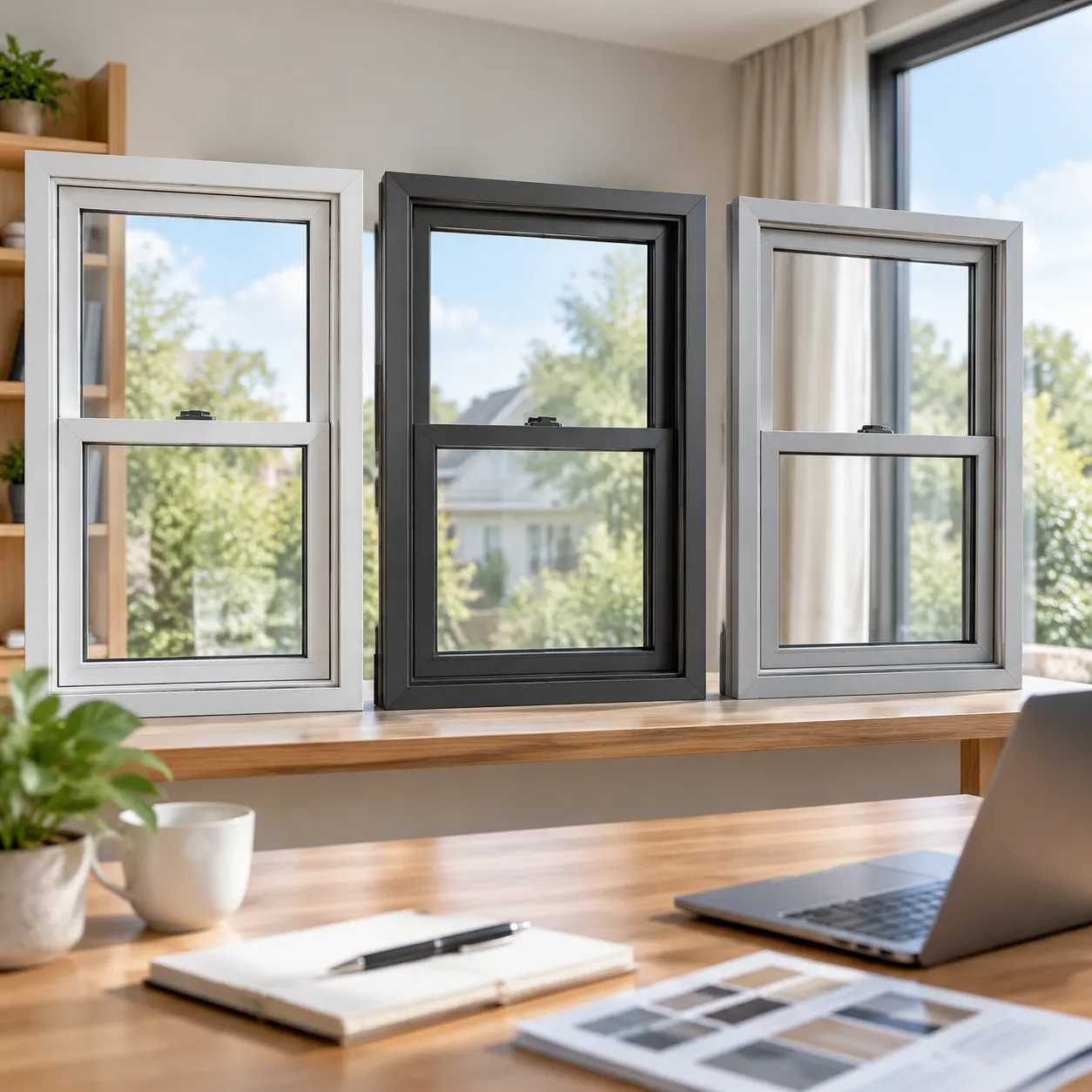
Upfront Price Differences and Hardware Complexity
Single hung models deliver immediate savings on equipment and manufacturing overhead:
-
- Lower Upfront Expense: A single hung aluminum unit typically costs 20% to 35% less than an equivalent double hung model.
- Simplified Hardware: Operating only one sash cuts the required hardware in half. Single hung frames require just one pair of balance mechanisms (block-and-tackle or spiral balances) and fewer latch assemblies, reducing both production cost and potential mechanical failure points.
- Streamlined Fabrication: Fewer extruded interlocking meeting rails make factory assembly faster and keep single hung aluminum windows prices significantly lower across standard and custom sizes.
| Performance & Cost Factor | Single Hung Aluminum Windows | Double Hung Aluminum Windows |
|---|---|---|
| Average Unit Cost Range | $180 – $650 | $260 – $890 |
| Moving Hardware Components | 1 sash balance set + single lock | 2 sash balance sets + dual tilt latches |
| Air Infiltration Rating | Superior (0.08 to 0.15 CFM/sq ft) | Moderate (0.15 to 0.30 CFM/sq ft) |
| Structural Wind-Load Rating | High (DP 50 to DP 70+) | Standard to Moderate (DP 35 to DP 50) |
| Long-Term Seal Failure Risk | Low (continuous upper factory seal) | Moderate (dual operational weatherstripping) |
Air Infiltration and Structural Strength Benefits
The fixed upper sash in our extruded aluminum hung windows creates distinct engineering advantages:
-
- Superior Weather Tightness: Because the top sash is permanently glazed into the master frame, there is no horizontal perimeter gap at the top. This significantly lowers air infiltration ratings and prevents draft penetration during extreme weather.
- Enhanced Structural Integrity: A stationary upper sash acts as a rigid structural brace within the frame. This allows single hung aluminum frames to achieve higher Design Pressure (DP) and Performance Grade (PG) ratings, making them ideal for high-wind zones, multi-story applications, and large architectural spans.
Maintenance Needs and Long-Term Seal Reliability
Fewer dynamic components translate directly to reduced lifetime ownership costs:
-
- Zero Upper Seal Degradation: Double hung windows rely on brush seals and compression gaskets along both upper and lower tracks that wear down over time from friction and UV exposure. Single hung designs eliminate top-sash wear entirely.
- Fewer Service Calls: With fewer springs, tilt latches, and pivot pins to calibrate or replace, single hung systems maintain their smooth glide and secure lock engagement for decades with basic track cleaning and occasional silicone lubrication.
Standard Single Hung Aluminum Window Sizes and Prices
Window dimensions and structural performance ratings directly determine your total project cost. Smaller residential profiles require fewer raw materials, while larger commercial-grade systems require thicker extrusion walls and heavy-duty balance hardware to handle higher wind-load pressures.
Below is a direct cost breakdown of standard rough openings, comparing factory unit prices against fully installed costs.
| Dimensions (W x H) | Typical Application | Unit Price (Supply Only) | Total Cost (Fully Installed) |
|---|---|---|---|
| 24" x 36" (2030) | Bathrooms, utility rooms, closets | $180 – $290 | $350 – $520 |
| 32" x 54" (2846) | Standard bedrooms, secondary living areas | $240 – $410 | $460 – $710 |
| 36" x 60" (3050) | Primary living rooms, master bedrooms | $310 – $530 | $580 – $890 |
| 48" x 72" (4060) | Large architectural spans, multi-story spaces | $450 – $780 | $780 – $1,250 |
Residential vs. Commercial AAMA Performance Grade Pricing
The performance class assigned by the American Architectural Manufacturers Association (AAMA) impacts your budget significantly.
-
- Residential (R-Grade) Profiles: Designed for standard single-family homes and low-rise properties. These extrusions utilize lighter wall thicknesses (typically 1.2mm to 1.4mm) and standard nylon sash balances. They offer the lowest entry point for projects prioritizing our standard residential window solutions.
- Commercial & Heavy-Commercial (CW & AW Grades): Engineered for mid-rise to high-rise structures, hospitality projects, and coastal applications exposed to high wind loads. These profiles feature heavy-gauge extrusions (2.0mm+ wall thickness), structural silicone glazing, and stainless steel spiral or block-and-tackle balances. Expect to pay a 35% to 65% premium over residential-grade units for these certified commercial window solutions.
Long-Term Value, Lifecycle Costs, and ROI
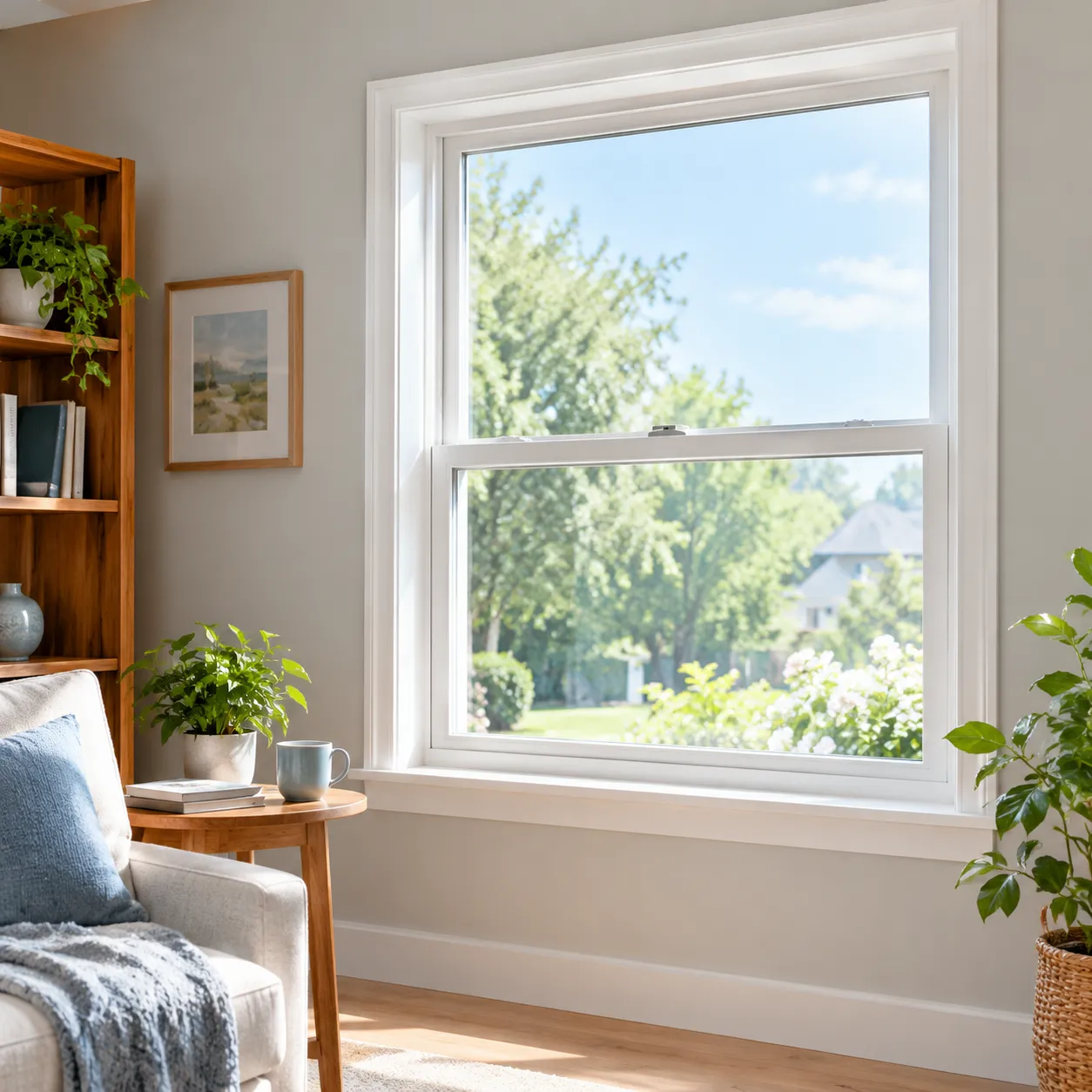
Investing in single hung aluminum windows is a long-term play where structural longevity and low maintenance offset initial acquisition costs. When evaluating overall energy efficient aluminum window ROI, these units consistently outperform alternative frame materials over a multi-decade timeline.
30 to 45+ Year Lifespan vs. Vinyl and Wood
Aluminum provides unmatched structural rigidity, resisting warping, rotting, cracking, and insect damage.
| Frame Material | Expected Lifespan | Maintenance Level | Lifetime Replacement Cycles |
|---|---|---|---|
| Architectural Aluminum | 30 – 45+ Years | Very Low (Occasional wash) | 1x (Zero replacements needed) |
| Standard Vinyl (uPVC) | 15 – 25 Years | Low (Prone to UV brittleness) | 2x – 3x |
| Treated Wood | 20 – 30 Years | High (Periodic paint/sealant) | 2x |
While standard vinyl units degrade under intense UV exposure and wood frames demand recurring painting and sealing costs, aluminum maintains frame geometry and operating tolerance for decades without structural fatigue.
Energy Code Compliance and Utility Savings
Modern single hung profiles utilize advanced polyamide thermal breaks paired with high-performance Low-E insulated glass units (IGUs) to meet and exceed regional fenestration codes:
-
- Optimized U-Factor Ratings: Thermal breaks halt heat conduction through the frame, cutting winter heating loss.
- Controlled SHGC (Solar Heat Gain Coefficient): Spectrally selective coatings block infrared radiation to dramatically lower summer peak cooling loads.
- Air Infiltration Resistance: The fixed top sash design eliminates half the joint seals found in double hung units, maintaining airtight performance against draft leakage year-round.
Modern Curb Appeal and Property Resale Value
Sleek, narrow sightlines maximize visible glass area and deliver the clean, industrial-modern aesthetic desired in contemporary architecture. Upgrading to high-grade single hung aluminum units yields significant returns:
-
- High Recoup Rate: Premium aluminum fenestration upgrades typically recoup 65% to 75% of project costs upon property resale.
- Architectural Versatility: Factory-applied AAMA powder coatings and anodized finishes resist chalking, fading, and scratching, preserving exterior curb appeal indefinitely.
- Low Maintenance Expense: Rigid aluminum sash hardware minimizes operational wear, virtually eliminating recurring service and repair call-outs.
For technical specifications on lifecycle durability and structural ratings, explore our window and door design FAQs to match the right glazing system to your project.
Smart Budgeting: How to Get the Best Price on Aluminum Windows
Getting the lowest single hung aluminum windows prices without sacrificing structural integrity comes down to smart planning and manufacturing directness. Here is how we optimize procurement costs on every project:
1. Standardize Rough Openings to Skip Custom Upcharges
Custom sizing adds an immediate 15% to 30% surcharge to your production bill.
Stick to standard dimensions: Aligning framing dimensions with common modular sizes (like 36"x60" or 48"x72") cuts fabrication lead times and avoids custom setup fees.
Coordinate window schedules: Mixing standard vertical single hung units alongside horizontal sliding windows in uniform opening sizes reduces overall factory run costs.
2. Target High-Performance Glass by Elevation
You do not need maximum solar-control Low-E coatings on every wall of a building.
South & West walls: Invest in low Solar Heat Gain Coefficient (SHGC < 0.25) glass with argon gas fills where intense direct sunlight drives up AC cooling loads.
North & East walls: Use standard dual-pane Low-E insulated glass units to capture daylight while trimming $40 to $80 per unit off your glazing bill.
3. Source Factory-Direct from Custom Architectural Fabricators
Middlemen, supply distributors, and third-party dealers routinely add 20% to 40% in markups onto aluminum fenestration orders. Sourcing directly from an architectural manufacturer provides:
Wholesale pricing tiers on both standard frames and custom architectural extrusions.
Certified AAMA powder coating and structural hardware options at cost.
Precise delivery staging that eliminates job site storage damage and contractor re-order costs.
Frequently Asked Questions (FAQs)
Are single hung aluminum windows cheaper than vinyl?
Standard non-thermal aluminum frames can sometimes match or sit slightly below high-end vinyl in raw unit cost. However, high-performance single hung aluminum windows prices generally run 20% to 40% higher than standard vinyl. While vinyl offers lower initial costs, aluminum provides superior structural rigidity, thinner sightlines, and more than double the functional lifespan.
Do I need thermally broken aluminum windows for my home?
Yes, if you live in an area with distinct heating or cooling seasons or where local building codes enforce strict energy performance targets. Standard aluminum transfers heat quickly, leading to condensation and higher utility bills. Opting for thermally broken aluminum windows cost more upfront—typically an added $100 to $250 per opening—but it is essential for meeting modern U-factor and SHGC standards in residential spaces.
How long do aluminum single hung windows last?
Quality aluminum single hung units reliably last 30 to 45+ years. Because aluminum does not rot, warp, crack, or degrade under intense UV exposure like vinyl or wood, the frames remain structurally sound for decades. You only need to periodically service the mechanical sash balances and weatherstripping over the life of the unit.
How do I get an accurate replacement quote?
To receive a precise price estimate for your project, gather the following details before requesting bids:
Rough opening dimensions: Width by height measurements for every window opening.
Installation scope: Specify whether you need a simple pocket retrofit or a full-frame tear-out.
Glass package specs: Determine if your project requires dual-pane Low-E glass, argon fills, or impact-resistant glazing.
Frame finish: Note your preference for mill finish, anodized coatings, or custom architectural powder coat colors.