

Formula details
Product Details
Overview
Why Source from China Aluminum Storm Windows Manufacturers
Cost Savings Through Scaled Extrusion Production
High-capacity extrusion facilities run continuous operations that drastically reduce per-unit manufacturing costs:
-
- Direct Billets Sourcing: Primary smelting networks provide direct access to prime A00 aluminum ingots, driving down the base metal cost.
- In-House Extrusion Presses: Facilities operating 800-ton to 2,500-ton extrusion lines process frame components continuously, lowering production expenses by 20% to 35% compared to domestic Western fabricators.
- Scrap Recycling Efficiency: Closed-loop aluminum recycling minimizes raw material waste during profile extrusion, keeping production pricing stable against global commodity swings.
Advanced CNC Cutting and Assembly Lines
Modern China aluminum storm windows suppliers rely on high-precision automated machinery to achieve tight structural tolerances:
-
- Dual-Head Precision Cutting: Automated double-mitre saws cut aluminum profiles with tolerances held strictly to ±0.5 mm, ensuring squareness and eliminating sash racking.
- Automated Corner Crimping: Mechanical corner-cleat crimping machines deliver seamless 45-degree joints that resist water penetration and wind loads.
- Multi-Axis CNC Milling: Hardware slots, weep holes, and drainage channels are milled automatically to ensure exact positioning across high-volume production batches.
Flexible OEM and ODM Customization for Foreign Markets
Export-focused manufacturers adapt designs to match specific regional building codes and architectural profiles:
-
- Rapid Tooling Development: New extrusion dies are engineered and sampled within 10 to 15 business days, accommodating non-standard master window frame depths.
- Profile Adaptability: Frame wall thicknesses range from 1.0 mm to 1.6 mm, engineered to match regional structural demands, from standard residential weatherboards to exposed coastal high-rises.
- Universal Track Configurations: Ready tooling supports classic two-track configurations, triple-track setups with integrated insect screens, and low-profile interior magnetic or snap-in panels.
Reliable Supply Chain for Raw Glass and Hardware Accessories
A window assembly is only as reliable as its weakest component. Sourcing from specialized manufacturing hubs solves component mismatching:
-
- Glazing Integration: Immediate proximity to premium float glass plants enables cost-effective fitting of certified tempered, acoustic laminated, and soft-coat Low-E glass panes.
- Industrial Weatherstripping: Factory-direct access to silicone-treated, high-density wool pile and vulcanized EPDM rubber gaskets ensures zero seal shrinkage over time.
- Durable Operating Hardware: Tilt-latches, zinc-alloy cam locks, and high-tensile stainless steel guide springs are sourced, assembled, and cycle-tested under a single roof.
Main Types of Aluminum Storm Windows from Chinese Suppliers
As direct manufacturers, we build aluminum storm windows to fit different regional building codes, installation styles, and climate demands. Sourcing from experienced china aluminum storm windows suppliers gives you access to several proven configurations engineered for export markets:
Two-Track Aluminum Storm Windows for Standard Residential Use
The two-track configuration is our most requested setup for mass-market residential housing and rental retrofits.
Design: Features an upper fixed glass panel and a lower operating glass panel, paired with a half-screen at the bottom.
Operation: The lower glass sash moves vertically up and down on a self-storing track for quick seasonal adjustments.
Application: Ideal for standard single-hung or double-hung primary windows where basic weatherproofing and low unit cost are the main priorities.
Triple-Track Storm Windows with Built-in Screen Storage
For clients needing full flexibility without manual panel swaps between seasons, we manufacture triple-track profiles.
Independent operation: Three separate tracks house two movable glass inserts and a full-size or half screen.
Full ventilation: Occupants can slide either the top or bottom glass open while keeping the screen locked in position.
Turnkey ordering: We supply fully assembled aluminum storm windows with screens, pre-glazed and fitted with heavy-duty corner keys to ensure rigid transit and rapid job-site installation.
Interior Aluminum Storm Panels for Historic and High-Rise Retrofits
Exterior storm window profiles are often banned in strict historic districts or impractical for tall apartment buildings. We produce slimline interior storm panels to bypass these limitations.
Mounting style: Installed inside the building envelope using concealed perimeter compression gaskets or magnetic channel seals.
Preservation compliance: Maintains the exterior facade completely untouched while eliminating drafts and traffic noise.
Condensation control: Interior secondary glazing stops warm indoor humidity from reaching cold exterior glass panes, which solves issues where buyers wonder whether storm windows stop aluminum windows from sweating.
Heavy-Duty Commercial Storm Windows for Severe Weather Resistance
For coastal projects, high-wind zones, and commercial properties, standard residential frames are insufficient. We fabricate heavy-gauge structural models designed to handle punishing conditions.
Thick-wall extrusion: Built using heavy-duty 6063-T5 alloy with minimum wall thicknesses between 1.4 mm and 2.0 mm to resist structural deflection.
Impact-ready glazing: Engineered to accept thick laminated glass, marine-grade perimeter fasteners, and dual EPDM bulb weather seals.
Application: Engineered for schools, seaside motels, and multi-family complexes exposed to high winds, coastal salt fog, and driving rain.
Material Grades and Specs from China Aluminum Storm Windows Manufacturers
6063-T5 Extruded Aluminum Frame Construction
We use prime-billet 6063-T5 aluminum frame extrusions for all primary profiles, sashes, and master frame assemblies. This specific alloy provides the optimal balance of tensile strength, corrosion resistance, and extrusion precision.
-
- Wall Thickness: Standard residential profiles run at 1.2 mm to 1.4 mm, while heavy-duty commercial framing runs from 1.8 mm to 2.0 mm to prevent frame deflection over large spans.
- Structural Temper: T5 artificial aging ensures a minimum tensile strength of 160 MPa and a yield strength of 110 MPa, resisting warping under intense structural loads.
- Corner Assembly: Mechanical corner keys with heavy-duty stainless steel fasteners ensure rigid, square corners that do not rack during transport or installation.
High-Performance Glazing Configurations
Glass configuration directly influences the thermal and acoustic performance of secondary retrofits. We source raw sheet glass from Tier-1 domestic float manufacturers to deliver flawless, defect-free panels.
-
- Clear Tempered Glass: 3.2 mm to 4 mm thickness. Fully tempered to meet ASTM C1048 standards for safety and impact resistance.
- Laminated Glass: 6.38 mm to 8.76 mm PVB interlayers designed for sound abatement (STC ratings up to 38+) and enhanced forced-entry resistance.
- Low-E Secondary Glazing: Hard-coat (pyrolytic) or post-temperable soft-coat Low-E glass that reflects radiant heat back to its source, cutting down HVAC runtimes. Balancing glass thickness and low-emissivity coatings helps optimize budgets; see our guide on aluminum storm windows prices and how to improve them for practical cost-performance trade-offs.
High-Density Weatherstripping and Gaskets
To block draft leaks and water penetration, we incorporate dual-seal systems across all operable sashes and frame perimeters.
-
- Silicone-Treated Wool Pile: High-density polypropylene yarn with an integrated polyethylene fin seal (fin-pile) along sliding sash tracks. It stops air leakage without binding operable panels.
- EPDM Rubber Seals: Commercial-grade ethylene propylene diene monomer (EPDM) gaskets set into the glass stops and bottom sill expanders. EPDM resists UV degradation, ozone cracking, and compression set from -40°C to 120°C.
Surface Treatment Standards: Architectural Powder Coating vs. Anodizing
We control finish lines in-house to protect extruded aluminum storm windows against coastal air, road salts, and sun exposure.
| Specification | Architectural Powder Coating | Anodized Finish |
|---|---|---|
| Applicable Standards | AAMA 2603 / AAMA 2604 | Qualanod / AAMA 611 (Class I & II) |
| Coating Thickness | 60–80 microns (μm) | 15–25 microns (μm) |
| UV Resistance | High (TGIC polyester / fluoropolymer) | Excellent (integral to the metal) |
| Color Versatility | Full RAL spectrum + custom color matching | Clear, champagne, bronze, black |
| Best Used For | Residential developments and light commercial | Modern high-rises and coastal environments |
Quality Control and Performance Standards for Export
Air Infiltration and Water Resistance Testing
Every batch of extruded aluminum storm windows undergoes pressure-chamber testing to simulate severe weather conditions:
-
- Air Infiltration: Tested under ASTM E283 standards at 1.57 psf (equivalent to a 25 mph wind), ensuring air leakage rates stay below 0.30 cfm/sq ft.
- Water Penetration Resistance: Tested per ASTM E331 under uniform static air pressure of at least 4.5 psf with continuous water spray rates of 5.0 U.S. gal/(ft²·h), guaranteeing zero interior leakage.
- Structural Load (Deflection): Verified under ASTM E330 at design pressure and 1.5x structural proof load to confirm zero permanent frame distortion.
NFRC and AAMA Alignment for Global Markets
Top-tier china aluminum storm windows suppliers build units that align directly with North American and European building codes:
| Performance Standard | Target Specification | Practical Buyer Benefit |
|---|---|---|
| AAMA 1002 / 101 | Limited air infiltration & structural loads | Guarantees compliance for commercial and residential retrofits |
| NFRC 100 / 200 | Certified U-factors and Solar Heat Gain (SHGC) | Seamless integration into energy-efficiency rebate programs |
| AAMA 2603 / 2604 | Architectural powder coat dry film thickness & salt spray | 5-to-10-year surface finish durability against coastal corrosion |
Meeting these standards simplifies jobsite approvals, while referencing guidelines for field installation and maintenance ensures our storm assemblies function at peak energy-saving ratings year-round.
Pre-Shipment Dimensional Checks and Corner Joint Strength
Before crating, our inspectors run mechanical checks on every production run:
-
- Diagonal Tolerances: Sashes and master frames maintain corner-to-corner variances within ±1.0 mm to prevent field racking and sash binding.
- Corner Joint Pull Tests: Hydraulic pull testing on mechanically fastened or crimped mitered corners verifies joints withstand minimum shear loads exceeding 200 lbs without separation.
- Screw Strip Testing: Fastener retention tests ensure stainless steel screws will not strip out of extruded screw bosses during operation.
In-Line Glass Defect Screening and Hardware Cycle Testing
Glass and hardware failures cause the majority of customer complaints. We isolate defects during active assembly:
-
- Optical Glass Scanning: Inline LED illumination tables screen tempered and Low-E glass panels for inclusions, scratches, pinholes, and roller wave distortion before glazing.
- Operating Force Checks: Window sashes are tested with force gauges to ensure operating effort remains under 15 lbs to open and latch.
- Hardware Cycle Longevity: Spring-loaded slide latches, pivot pins, and nylon slide guides are batch-tested through 5,000 continuous operating cycles without functional degradation, spring fatigue, or plastic snapping.
Custom Design and Private Label Capabilities
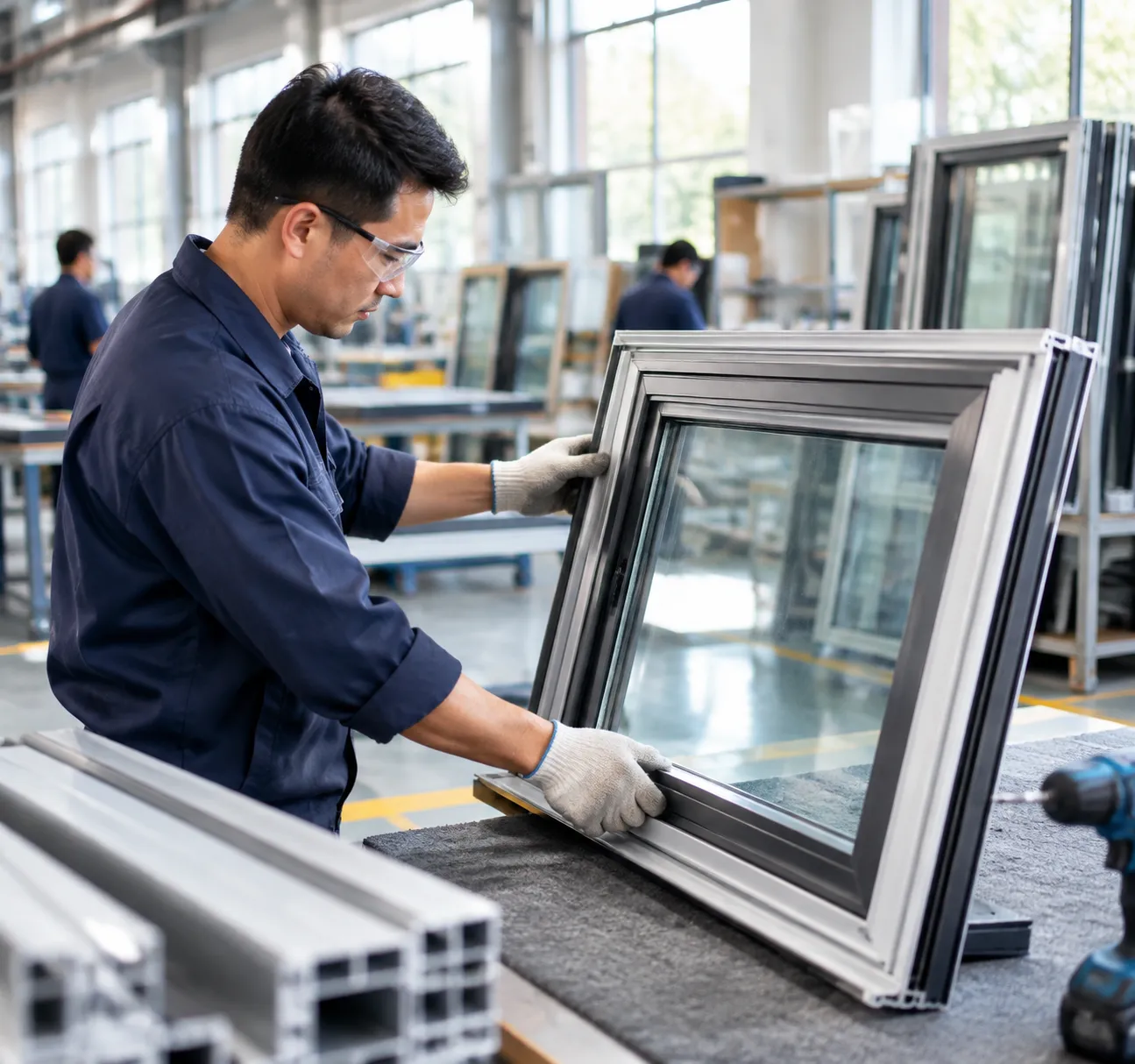
As seasoned china aluminum storm windows manufacturers, we do not just push off-the-shelf catalog models. We adapt our manufacturing lines to match your local market standards, structural requirements, and branding specs. Whether you run a distribution network, a commercial retrofit firm, or a private window brand, we supply full OEM and ODM production directly from our factory floor.
Custom Extrusion Dies for Architectural Profiles
Off-the-shelf extrusions often fail to match historic casings or regional retrofitting standards. We cut custom extrusion dies to recreate your exact profile dimensions, track depths, and wall thicknesses down to ±0.15mm tolerances.
-
- Tooling turnaround: New profile tooling takes roughly 10 to 15 days for sample production.
- Sample extrusion sign-off: We press, test, and ship physical corner cuts for dimensional and structural verification before launching mass extrusion runs.
- Tailored engineering: Our engineering team integrates specialized jamb pockets, thermal breaks, or snap-in trim channels through our custom architectural solutions to ensure your storm units integrate seamlessly with prime frames.
Precision Color Matching via RAL Codes
Storm windows must visually blend with existing prime windows and exterior siding. We eliminate color mismatches using automated architectural powder-coating lines.
-
- Color specification: Send us any standardized RAL color code, or mail a physical swatch for spectrophotometer matching.
- Surface treatments: Choose from AAMA-2603/2604 compliant powder coating, wood-grain heat transfers, or Class I clear/bronze anodizing.
- Batch consistency: Every run of powder coated storm window frames undergoes gloss-level checks and cross-hatch adhesion testing to avoid batch-to-batch variation across multi-container orders.
OEM Packaging, Protective Films, and Barcode Labeling
For wholesale distributors and building-supply dealers, we set up retail-ready and job-site-ready packaging so products move through your warehouse without repackaging costs.
-
- Branded protective tape: Custom-printed peel-off films feature your logo, installation warnings, and care instructions while protecting finished aluminum and glass from scratches during transit.
- Individual boxing: Master cartons, shrink-wrapped bulk packs, or retail corner-capped cartons configured to your order profile.
- Tracking and inventory: We print your SKU barcodes, part numbers, size labels, and destination tracking tags on both the protective films and outer crates. For complete white-label programs, explore our full customization options to streamline warehouse check-ins.
Specialty Hardware for Local Building Codes
Hardware configurations vary dramatically between North America, Europe, and Australasia. As experienced china aluminum storm windows suppliers, we stock and tool hardware assemblies that your local installers already know how to handle.
-
- Latches and retainers: High-impact nylon spring-loaded tilt latches, heavy-duty zinc die-cast slide bolts, and stainless steel slide locks.
- Stabilizer pins and fasteners: Corrosion-resistant 304 and 316 stainless steel screws and pins to eliminate galvanic corrosion against aluminum profiles.
- Corner keys: Concealed die-cast aluminum or heavy nylon corner brackets built to sustain transport racking without throwing sash frames out of square.
Pricing Breakdown and Minimum Order Quantities (MOQs)

Sourcing directly from China aluminum storm windows manufacturers cuts out distributor margins, but navigating factory pricing requires a clear understanding of order thresholds, profile tonnage, and production economics. We structure wholesale quotes to reflect actual factory inputs—raw aluminum billet rates, glass processing, and labor—rather than arbitrary catalog prices.
Average FOB Pricing Tiers Based on Order Volume
Free on Board (FOB) pricing drops significantly once your volume matches full container cycles. Ordering full container loads (FCL) minimizes factory changeover downtime, and we pass those savings directly down the line:
| Order Volume | Typical Container Load | Average FOB Unit Price (Standard 32" x 55") | Price Advantage |
|---|---|---|---|
| 50 – 199 units | LCL (Less than Container Load) | $42 – $55 / unit | Baseline wholesale |
| 200 – 499 units | 20ft GP Container (~350–400 units) | $32 – $40 / unit | 15% – 20% savings |
| 500 – 1,000+ units | 40ft HQ Container (~800–900 units) | $24 – $30 / unit | 30% – 40% savings |
Note: Pricing shifts depending on specified glass thickness (3mm vs. 4mm tempered), Low-E coatings, and custom powder-coat finishes.
Minimum Order Quantities (MOQs): Standard Sizes vs. Custom Profiles
China aluminum storm windows suppliers balance two separate production requirements: standard catalog fabrication and custom aluminum extrusion runs.
-
- Standard Profiles and Stock Dimensions: For off-the-shelf two-track or triple-track profiles in standard finishes (white, bronze, mill finish), our baseline minimum order quantity is 50 to 100 units. This allows contractors and dealers to place initial trial orders without tying up capital.
- Custom Extrusions and OEM Profiles: If your project demands custom aluminum window profiles with proprietary sash interlocks or mounting flanges, the MOQ is dictated by aluminum extrusion press limits. Billet presses require a minimum run of 500 kg to 1,000 kg (1,100 to 2,200 lbs) per profile shape, which translates to roughly 150 to 250 fully assembled storm window units depending on frame weight.
- Mixed Container Sourcing: If you mix storm frames with primary units like aluminum frame single hung windows for commercial use, we can combine billet alloy runs to meet extrusion thresholds without overstocking a single SKU.
Tooling Costs and Lead Times for New Aluminum Profile Dies
When historical retrofits or proprietary product lines require non-standard extrusions, tooling an exclusive die is straightforward and cost-effective in China:
-
- Tooling Cost: A standard aluminum extrusion die costs between $600 and $1,200 per shape, depending on profile complexity and wall thickness.
- Tooling Lead Time: Die fabrication and test extrusion take 10 to 15 business days. We produce initial sample swatches for your dimensional and snap-fit approval before mass production.
- Tooling Rebate Policy: When your cumulative order volume reaches 5 to 10 metric tons of extruded material, we credit the initial die fee back to your balance.
- Punch Tooling: In addition to the extrusion die, custom punch tooling is needed for drainage slots. Having aluminum storm windows weep holes explained in your shop drawings ensures we fabricate the drainage punches accurately the first time.
Managing Glass Costs and Currency Fluctuation Risks
International trade involves volatile underlying commodity prices. We protect procurement margins through straightforward pricing safeguards:
-
- Quotation Validity: Standard raw glass and aluminum ingot rates fluctuate weekly. We lock written FOB quotations for 30 days from issuance to give you time to finalize customer bids.
- Forward Material Contracts: On multi-container or annualized contracts, we lock aluminum billet prices at the Shanghai Metal Exchange (SME) price upon deposit, shielding your order from mid-cycle spikes.
- Currency Fluctuation Buffers: Quotes are set in USD. We maintain a ±3% currency fluctuation band; minor exchange shifts within this threshold do not alter your invoiced price, giving you stable landed costs.
Shipping Logistics and Breakage Prevention
Reinforced Plywood Crates and Steel A-Frame Packing
We use two primary packaging methods depending on the profile dimensions and whether units ship knocked-down (KD) or fully assembled:
-
- Custom Steel A-Frames: Best suited for pre-glazed units and oversized storm panels. Windows stand vertically at a 75-degree angle, distributing physical stress to the structural base rather than the glass.
- Fully Enclosed Plywood Crates: Built from ISPM 15-certified, fumigation-free engineered wood. We line the interior walls with 20mm high-density expanded polyethylene (EPE) foam and fit corner protectors on every sash.
- Surface-Level Protection: Every extruded profile is wrapped in low-tack protective film to prevent abrasions on powder-coated or anodized surfaces during unloading.
Moisture Prevention and Desiccant Placement
Ocean transit exposes cargo to massive temperature swings, causing container rain that can pit raw aluminum or stain glass surfaces.
-
- Desiccant Allocation: We place 1kg continuous-absorption calcium chloride desiccant bags along the container walls and pack 50g silica gel packs inside each individual crate.
- Vapor Barrier Wrapping: Every finished wood crate is wrapped in heat-shrink polyolefin film to block humid salt air throughout the 20 to 45-day transit window.
FCL vs. LCL Shipping Considerations
Glass products require strict control over cargo movement. Choosing between Full Container Load (FCL) and Less than Container Load (LCL) directly affects breakage rates:
| Shipping Mode | Best Used For | Handling Risk | Cost Efficiency |
|---|---|---|---|
| FCL (20GP / 40HQ) | Volume orders (300+ units) | Minimal: Sealed at our dock, opened only at your facility | Highest per-unit savings |
| LCL | Small sample runs / urgent batches | Moderate to High: Multiple dock transfers by third-party handlers | Higher freight cost per unit |
For building material distributors ordering complete container volumes of standard aluminum windows alongside custom storm units, FCL shipping consistently keeps transit breakage rates below 0.3%.
Handling Import Duties, Customs Clearance, and Port Delivery
Working directly with experienced china aluminum storm windows suppliers simplifies international logistics:
-
- Trade Terms: We ship under FOB, CIF, or full DDP (Delivered Duty Paid), where our logistics partners handle drayage directly to your warehouse.
- HS Classification: Storm windows and secondary glazing systems are classified under HS Code 7610.10 (Aluminum doors, windows, and their frames).
- Documentation Support: We supply detailed commercial invoices, itemized packing lists matched to crate numbers, Bills of Lading (B/L), and Certificates of Origin (CO) to prevent port customs delays.
How to Vet and Audit China Aluminum Storm Windows Suppliers
Vetting overseas suppliers requires a systematic check to filter out intermediaries and protect your capital. When we evaluate potential china aluminum storm windows manufacturers, we follow four non-negotiable auditing steps to verify operational capacity, product consistency, and financial safety.
Verifying Factory Business Licenses and Export Credentials
Do not rely solely on digital storefronts. We verify the legal standing of every vendor before discussing profile specs or pricing:
-
- Business Scope (营业执照): Check the official Chinese business license. The registered scope must explicitly state "manufacturing" or "production" (生产, 制造) of aluminum profiles or windows. If it only lists "wholesale" or "consulting," you are dealing with a trading company.
- Unified Social Credit Code: Cross-reference their 18-digit code on the National Enterprise Credit Information Publicity System to check for registered capital, active litigation, or administrative penalties.
- Direct Export License: Confirm the supplier holds a valid Customs Registration Code to clear shipments under their own name, avoiding middleman export agencies that inflate costs.
Evaluating Factory Workshops via Third-Party Audits
A remote factory visit confirms whether a vendor has the machinery to hold tight dimensional tolerances. We use either scheduled live video walkthroughs or unannounced inspections through agencies like SGS or TÜV:
-
- Machinery Verification: Ensure the factory floor runs dedicated dual-head CNC cutting saws, automatic corner-crimping machines, and punch presses designed for storm window sash channels.
- Extrusion Storage & Handling: Look for raw 6063-T5 aluminum billet stock and dedicated racks for coated profiles to ensure extrusions do not get scratched during handling.
- Assembly Line Cleanliness: Check the glazing area. Clean, temperature-regulated silicone and weatherstripping installation lines directly correlate with leak-free storm panels.
Ordering Production-Grade Sample Units Before Full Runs
Never sign a container contract based solely on profile corner swatches. We always commission a fully assembled, production-grade storm window built to our exact job-site dimensions. Partnering directly with a proven China aluminum exterior storm windows wholesale supplier guarantees that the sample matches standard production line quality.
When the sample arrives, run these physical checks:
-
- Corner Miter Tightness: Check frame joints for daylight gaps; crimps must be square, rigid, and sealed with corner brackets.
- Track Operation: Slide the sashes up and down repeatedly to ensure the tension springs and latch bolts engage the jamb tracks smoothly.
- Pile and Gasket Fit: Confirm the high-density wool pile and rubber gaskets stay seated in their extrusions without pulling out when cycling the sash.
- Glazing Tolerances: Verify glass thickness, edge polish quality, and perimeter seal adhesion.
Establishing Balanced Payment Terms
Protecting cash flow requires disciplined payment structuring. Reputable china aluminum storm windows suppliers operate on standard terms that keep both parties accountable throughout extrusion, assembly, and ocean transport:
| Milestone | Standard Term | Purpose |
|---|---|---|
| Contract Signing | 30% T/T Deposit | Secures raw aluminum billets, triggers custom die setup, and reserves glass supply. |
| Post-Production QC | Pre-Shipment Inspection | Confirm dimensional accuracy and packaging through detailed photo/video reports before release. |
| Bill of Lading Issued | 70% Balance Against B/L | Pay the balance only after receiving the certified Bill of Lading copy proving the cargo is on board. |
Never accept demands for 100% upfront payment on volume orders. Structured milestones allow you to secure high-quality aluminum storm windows at discount prices while retaining complete leverage over product quality and shipping schedules.
Frequently Asked Questions About China Aluminum Storm Windows Manufacturers
Standard Production Lead Time for Container Orders
For a standard 20GP or 40HQ container of extruded aluminum storm windows, our factory production run typically takes 25 to 35 days from final shop-drawing signoff and deposit confirmation.
-
- Standard Sizing & Finishes: 20–25 business days.
- Custom Extrusions & Molds: Adds 10–14 days upfront for die fabrication and profile sample testing.
- Peak Season Adjustments: Lead times can expand by 7–10 days ahead of major factory maintenance windows like the Lunar New Year.
Sea Freight Breakage Prevention for Glass Panels
Ocean transport subjects glass to heavy vibration, lateral shifting, and moisture exposure. Reputable China aluminum storm windows suppliers use strict industrial packaging protocols to ensure less than a 0.5% breakage rate:
-
- Packaging Structure: Heavy-duty, fumigation-free plywood crates or dedicated steel A-frames.
- Panel Isolation: High-density EVA foam pads and corner protectors placed between every individual sash to prevent glass-to-metal contact.
- Container Loading: Pallets are secured using structural timber bracing, ratchet tie-downs, and industrial dunnage air bags.
- Moisture Defense: Industrial silica desiccant pouches inside vacuum-sealed polyethylene wrappers neutralize container sweat across varied climate zones.
Matching US and European Historic Preservation Standards
Yes. Historic districts strictly regulate sightlines, exterior profiles, and frame depths. As custom china aluminum storm windows manufacturers, we routinely fabricate custom dies replicating legacy wood and blind-stop interfaces.
-
- Ultra-Slim Profiles: We maintain narrow sightlines so secondary glazing remains virtually invisible from the curb.
- Profile Compatibility: Our engineers design mounting flanges that sit neatly over historic wood frames, traditional sashes, or exterior sliding windows.
- Custom Finishes: We match regional architectural boards via custom RAL powder coating, matte bronze, and clear anodized finishes.
Lifespan of Extruded Aluminum Storm Window Frames
Commercial-grade 6063-T5 aluminum storm frames routinely deliver a lifespan of 30 to 40+ years. Unlike vinyl or roll-formed aluminum, structurally extruded profiles resist warping, thermal bowing, and coastal UV degradation.
| Component | Standard Lifespan | Maintenance Requirements |
|---|---|---|
| 6063-T5 Extruded Aluminum Frame | 30+ Years | Periodic soap and water washing |
| Powder-Coated / Anodized Surface | 15–25 Years | None under normal atmospheric exposure |
| EPDM & Wool Pile Weatherstripping | 8–12 Years | Replaceable via slip-in sash channels |
| Tempered Glazing Panels | Lifetime | Standard glass cleaner |
| Operating Hardware & Latches | 10–15 Years | Periodic lubrication with dry silicone |
Handling Defective or Damaged Units Upon Arrival
We operate a direct compensation protocol for import shipments to keep job schedules on track when secondary panels or companion units for casement windows arrive with transit issues:
-
- Spare Parts Provision: Every FCL shipment includes a 1%–2% buffer of critical consumables, including replacement latches, corner keys, weatherstripping, and slide bolts.
- Immediate Documentation: Consignees submit photos of crate damage, shipping container seals, and unit identification labels within 7 days of container de-vanning.
- Replacement & Credit Resolution: Verified manufacturing defects or structural shipping damage are credited directly against your next balance invoice or expedited via air cargo for urgent project completions.